The healthcare industry is rapidly changing. From AI-enabled diagnostics and robotic surgeries, innovation is making disruption commonplace in all aspects of medical care. However, one area that is often under the radar in this transformation is the medical supply chain—the backbone to ensure the clinician can care for patients with the right tools, equipment, and medicines when needed.
A clinician’s ability to provide care relies heavily on the hospital’s procurement and supply chain efficiency. The existing procurement processes, including manual orders, multiple vendors, and no real-time tracking, can lead to timely delivery, high costs, and negative patient care outcomes.
Enter a digital medical supply chain. Smart hospitals are beginning to implement digital platforms, data analytics, and automation in their sourcing, supply chain, and equipment availability for procurements.
At HOSPkart, we know that advancing smart and connected health care ecosystems starts with a digital first procurement process. Here is how to get started and why it matters.
What Is a Digital Medical Supply Chain?
Digital medical supply chain uses technology, automation and data to handle the procurement, logistics, and inventory in the healthcare industry.
Hospitals are no longer using phone, paper, or a piecemeal system of vendors instead using an all-in-one digital platform that links suppliers, monitors inventory and orders in real-time.
Consider it a smart ecosystem that anticipates what your hospital requires, identifies proven suppliers, does price comparisons, and automates delivery schedules, all without compromising compliance and quality requirements.
Fundamentally, a digital medical supply chain is able to generate visibility, efficiency, and reliability throughout the procurement process.
The Limitations of Traditional Procurement
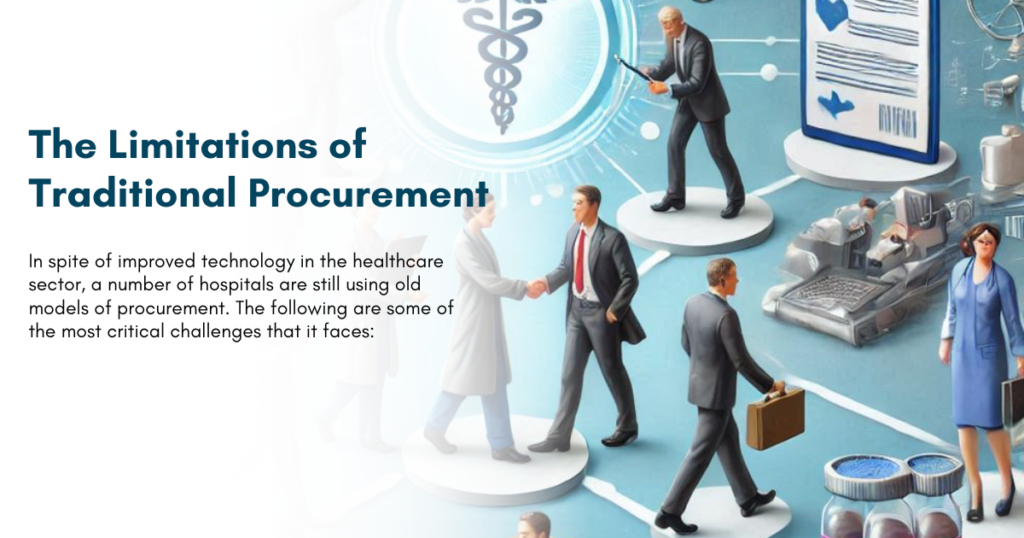
In spite of improved technology in the healthcare sector, a number of hospitals are still using old models of procurement. The following are some of the most critical challenges that it faces:
a. Lack of Visibility
The hospital usually has several suppliers of different types of equipment which include surgical equipment, diagnostic equipment, intensive care equipment, rehabilitation equipment and so on. The stock, the delayed, and the urgent replenishment are not known without the centralized tracking.
b. Time-Consuming Vendor Coordination
The procurement officers will waste hours in calling vendors, price comparison, and negotiating terms and products authenticity checks. This causes supply delays and increase in administrative costs.
c. Inconsistent Quality
The lack of Certified Manufacturer can also put hospitals at risk of buying non-certified or poor-quality equipment, which can negatively affect the safety of patients and regulatory standards.
d. Inventory Mismanagement
Hand tracking usually leads to excess stocks or stockouts- both expensive and unproductive to hospitals.
e. Lack of Data-Driven Decisions
The purchasing decisions that are not been made using analytics and demand forecasting tend to result in waste, inefficiency and unwarranted costs.
A digital medical supply chain addresses these issues by centralizing, automating and optimizing all procurement processes.
The Shift Toward Smart Hospitals
Healthcare organizations are transforming into smart hospitals—hospitals that leverage technology to improve efficiency, provider and patient care delivery, and operational excellence.
A smart hospital utilizes technology for all aspects of the care delivery process—from electronic health records and automated billing processes to real-time equipment monitoring and supply chain inventory and management systems.
The driving force behind this institutional transformation is the digital medical supply chain. It allows healthcare organizations to:
- Better predict their equipment needs, informed through predictive analytics
- Maintain appropriate inventory levels
- Cost and time savings in procurement processes
- Regulatory compliance
- Seamless collaboration between departments
Smart hospitals realize the importance of a smart supply chain in order to support and sustain smart care.
Benefits of a Digital Medical Supply Chain
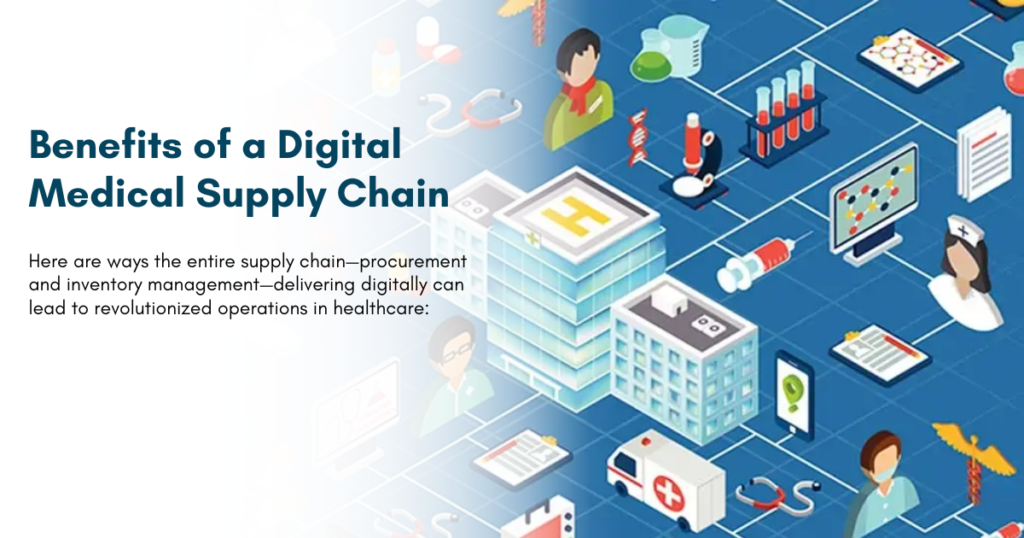
Here are ways the entire supply chain—procurement and inventory management—delivering digitally can lead to revolutionized operations in healthcare:
a. Real-Time Visibility and Tracking
Opting for a digital platform enables you to track your orders, deliveries, and inventory to a great level of detail. You can track each and every piece of equipment from the time it leaves the manufacturer to the time it arrives at the hospital, significantly lessening the risk of delays and errors along the way.
b. Verified and Reliable Suppliers
By choosing to leverage a digital procurement platform like HOSPkart, hospitals gain access to certified manufacturers and verified suppliers. This can lead to minimizing risk and ensuring compliance with medical device safety standards.
c. Data-Driven Decision Making
Insight driven by analytics enables hospitals and health systems to predict demand through a more informed process and predict the budgeting required for an operating plan. The importance of medical supply chain data should not be overlooked. Data surfaces relevant insights.
d. Cost Savings
Hospitals will ultimately save a significant amount of money on buying products by removing third parties and lowering manual processing costs. Being able to see prices upfront and comparing whose price is better will help eliminate wasted expense.
e. Efficiency and Automation
Automating processes creates workflows from generating purchase orders to managing invoices that simplify and lowers administrative functions. This frees staff to spend more time with patients as opposed to managing the paperwork.
f. Reduced Waste
Digital records can track expiration dates, usage, and demand cycles that help hospitals limit excess buying and reduce medical waste.
g. Enhanced Compliance
Every product that is bought through a validated digital source can be tracked and ensures that the product meets healthcare requirements for both patient safety and institutional integrity.
The Role of AI in Medical Supply Chain Transformation
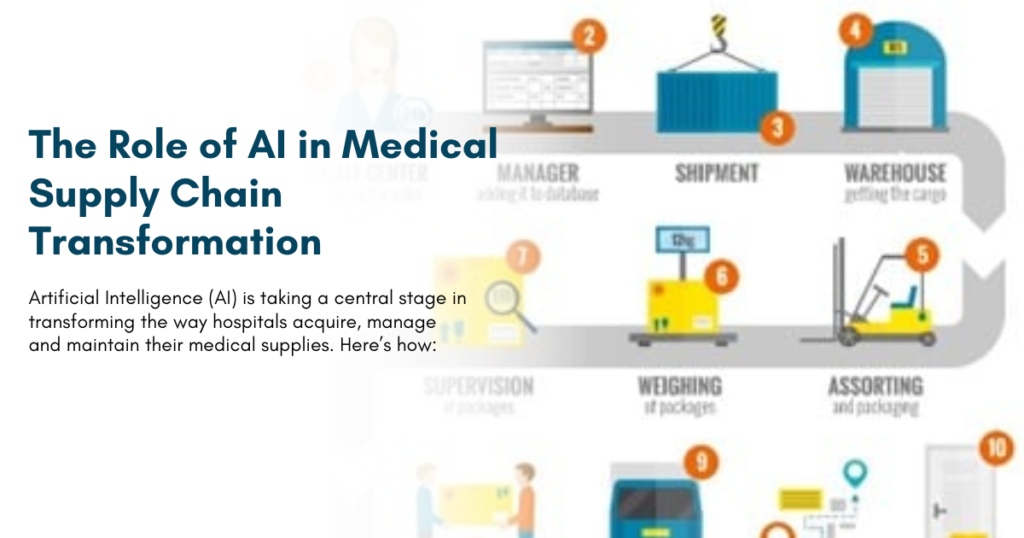
Artificial Intelligence (AI) is taking a central stage in transforming the way hospitals acquire, manage and maintain their medical supplies. Here’s how:
a. Predictive Procurement
AI algorithms process historical data, inflow of patients and demand trends of seasons to forecast future needs in supplies. This helps to avoid shortages and be ready in times of high demand.
b. Smart Inventory Management
The AI tool watches the use rates and sends reorder notifications automatically. This is such that vital equipment such as oxygen masks or ventilator components do not run out at the time they are most required.
c. Supplier Performance Analysis
AI technology is able to analyze suppliers according to delivery time, quality and pricing trend and make data-driven decisions regarding a vendor choice.
d. Automated Quality Control
Hospitals can check the equipment accuracy of the equipment prior to its acceptance using AI-based verification. This provides an additional level of security and dependability.
e. Enhanced Forecasting and Budgeting
Learning the patterns, AI will assist in maximizing budgets, minimizing wastages, and streamlining procurement with patient care objectives.
We are working on how AI will be utilized in all phases of procurement at HOSPkart, starting with the selection of suppliers and allowing forecasting inventory, making hospitals smart systems, indeed.
HOSPkart: Empowering Smart, Digital Procurement
HOSPkart is not only a medical supply platform, it is a digital procurement solution built to simplify and better healthcare supply chains across India.
Here is how HOSPkart enables smart hospitals:
a. Verified Suppliers Only
Every supplier of HOSPkart is verified and certified, so hospitals can work with hospital-approved, safe and authenticated products.
b. One Platform for All Needs
Whether it’s surgical products, diagnostic products or products for the ICU or rehabilitation, you will find everything in one place.
c. Transparent Pricing
HOSPkart achieves price transparency by allowing hospitals to view multiple, certified Manufacturer simply and know the costs upfront—without hidden fees or middlemen.
d. Seamless Procurement
Hospitals can browse, compare and order products digitall, reducing time and financial burden of the operation.
e. Future-Ready with AI
HOSPkart is commencing the development of AI-based procurement intelligence tools to predict a hospital’s needs, automatically reorder supplies when necessary, and approach inventory stock optimization.
f. Faster Delivery, Better Service
HOSPkart’s logistics partner will make every effort to ensure on-time deliveries across India, helpful to on-going operations of hospitals.
By closing the loop between hospital medical supplies and hospitals, HOSPkart is empowering healthcare institutions and workers to focus on what matters most, patient care.
The Future of Digital Supply Chains in Healthcare
The current phase of healthcare revolution will be characterized by connectivity, intelligence, and resilience.
Digital supply chains that are implemented in hospitals will provide a number of benefits:
- Agility: respond swiftly to changes in the market or demand.
- Accuracy: Have uniform quality and compliance.
- Sustainability: minimise waste and consumption of resources.
- Scalability: Grow efficiently when the demand of patients grows.
With the development of AI, IoT, and data analytics, we will observe the introduction of real-time equipment monitoring, smart warehouses, and automated replenishment systems into hospitals, which will form an actual ecosystem of connected healthcare.
HOSPkart seeks to pioneer this revolution in India whereby all the large and small hospitals are able to access a digital, transparent, and intelligent procurement network.
How Hospitals Can Transition to a Digital Supply Chain
The transition from a traditional procurement model to a digital model most likely won’t take place in a day; however, it is possible for an organization to achieve this by following these specific steps:
- Evaluate Current Procurement Disruption – Consider where there are procurement delays and inefficiency, and without hesitation inspect data blind spots.
- Select a Digital Platform – Select a trustworthy, digital supply chain platform, such as HOSPkart, that connects suppliers, pricing, and logistics.
- Train Procurement Staff – You should familiarize your team with digital-based workflows and educate them on the system’s workings.
- Utilize Data Analytics – Always use data insights to forecast demand and analyze spending to streamline control.
- Incorporate Hospital Management Software (HMS) – Link your procurement model into the entity’s other operational processes.
Following these systematic steps will ensure an organization receives not only a perfect balance of efficiency, transparency and control but will create an optimal hospital supply chain.
Conclusion
In the sphere of the contemporary healthcare, efficiency is not a choice but a necessity. The level of care is not only based on the professionalism and modernity of the applied treatments but also should be based on the stability of the systems on which the skills are applied.
A digital medical supply chain is used to make sure that a hospital can access the verified equipment of high quality when it is needed the most, without any delays, misunderstandings, and risks.
We are determined to create this future at HOSPkart, where procurement in healthcare is intelligent, transparent, and artificial intelligence.
Practical hospitals do not come into existence and become smarter, but are innovated, trusted, and transformed digital.
And the journey to becoming one?
It begins with the appropriate partner.
It starts with HOSPkart.